

Key Takeaway
A better AI conversion rate looks good in a report. Before moving your budget, check how many good customers AI and Google actually bring you.
“Our AI traffic converts four times better than Google.”
If that landed in your monthly marketing report, you'd probably want to know what your agency was doing to get more of it. Fair enough. But before anyone starts moving the budget around, there's another question worth asking: how many customers are we talking about?
People who find you through ChatGPT might be more likely to get in touch, while Google is still bringing in most of the work. Both can be true. Knowing which is happening matters more than picking a winner for the slide deck.
We'd give AI search a serious look. We'd also want to see what those leads turn into before asking you to bet more money on them.
Table of Contents
What the AI conversion study actually found
Marie Haynes reviewed 12 months of GA4 data across 100 websites, covering more than 145 million sessions. ChatGPT sent just 0.62% as much traffic as Google organic. In other words, Google was sending far more people to those sites.
The people coming from ChatGPT were more likely to convert, though. Among the 55 sites tracking conversions, ChatGPT's rate was 13.8%, compared with 3.02% for Google organic. You can see why that number gets attention.
But Google still produced 27 times more conversions than all the AI assistants combined. That's the part we'd want sitting right next to the impressive percentage in the report.
There's also a gap between a conversion in Google Analytics and a customer in your business. We don't know which industries were included, the exact reporting dates, or what each site counted as a conversion. A recorded action on a website doesn't necessarily mean a new patient booked or a homeowner requested an estimate.
If you're already getting AI referrals, this gives you a reason to look more closely. It doesn't tell you that they'll be better for your business.
A full calendar needs more than a great percentage
The study puts the tradeoff in perspective. ChatGPT had the stronger conversion rate, while Google brought in far more traffic and conversions overall.
| What the study measured | What it found |
|---|---|
| ChatGPT traffic compared with Google organic | 0.62% as much traffic |
| ChatGPT's recorded conversion rate | 13.8% |
| Google organic's recorded conversion rate | 3.02% |
| Total conversions from Google organic | 27 times more than all AI assistants combined |
If you only saw the conversion-rate row, you'd probably want more ChatGPT traffic. But the total tells you why Google still deserves attention: it produced far more conversions, even with the lower rate.
One detail matters here. The traffic and conversion-rate figures compare ChatGPT with Google organic. The 27-times figure compares Google with all the AI assistants combined. Those aren't quite the same comparison.
And none of those numbers tells us how many patients attended an appointment or how many estimates became paid jobs. For your business, that's where the next conversation needs to go. Which inquiries were a good fit, who actually booked, and what happened after that?
The distinction that matters: urgent need or considered choice?
Start with what you're selling. Two people looking for the same business can need very different things.
We work with healthcare and wellness practices, home service businesses, aesthetics businesses, and dental practices, along with other local businesses. Think about how the buying decision changes in each.
These situations won't predict where someone searches, but they help explain what to watch when the inquiries arrive.
A plumber's emergency call and replacement estimate are different opportunities
If water is leaking into your kitchen, you're probably looking for someone who serves your address and can answer the phone now. If you're planning to replace a water heater, you have more room to compare equipment, costs, warranties, and companies.
A channel bringing in good replacement estimates might deserve more attention even if it sends fewer people overall. You still need a reliable way to get the emergency calls, though. Label every inquiry “plumbing” and you'll have a hard time seeing either story.
A dental practice needs to distinguish interest from a useful appointment
An implant inquiry and an urgent toothache call could both become new-patient appointments. An existing patient calling to reschedule is something else entirely, even if your tracking records all three as calls.
Your front desk can help fill in what the source label can't tell you: what the person needed, whether the practice could help, and whether they booked. Don't dismiss every insurance question, either. It might be part of a perfectly good new-patient conversation.
A medspa needs to know what happens after the consultation request
Someone arriving from an AI assistant might have a detailed list of treatment questions. That's useful to know, but it doesn't tell you whether they'll book, attend, or be a suitable candidate. Your qualified providers still make that call.
Follow the request through the consultation and any later outcome your records can confirm. A busy request form feels encouraging; the people who actually show up tell you more.
A healthcare or wellness practice needs fit, location, and access
Someone can sincerely want an appointment and still need a service, location, time, or payment arrangement you don't offer. Record why it wasn't a fit so you can see whether your website is leaving people with the wrong impression.
The same goes for professional services, pet services, rentals, and other local businesses. A useful lead is someone you can actually help with the work you want and have room to take on.
Google and AI are already part of the same decision
Picture someone asking an AI assistant about treatment options, searching a practice's name on Google, reading reviews, and then calling from its Business Profile. Which channel gets the credit?
Your tracking may have an answer, but it won't necessarily tell you about every step that person took. Even Google includes AI in its own search experience. Google's guidance on AI features says AI Overviews and AI Mode are included in overall Search Console search traffic under the Web search type.
So a report of external chatbot referrals leaves some AI-influenced activity out of the picture.
Comparison searches are worth a look, too. Semrush followed the same 400 U.S. desktop keywords from September 2025 through August 2026 and found that AI Overview coverage rose from 45.75% to 88%. Those searches covered banking, ecommerce, and software, so we can't borrow the percentages for local healthcare or home services. The study didn't measure leads, either.
What you can do is search your own priority services and city, then try the cost, review, and comparison questions customers might ask. See what appears in the AI answer, its sources, Maps, and the regular results.
And when a customer volunteers, “ChatGPT suggested you, then I found you on Google,” keep that alongside the tracked source. It's useful context. Just remember it's still one person, so don't count the same opportunity twice.
Fix the information that has to survive every channel
Before you buy another tool to tell you where AI mentions your business, take a look at what a potential customer can actually learn about you.
BrightLocal surveyed a representative panel of 1,002 U.S. local-business owners. Sixty-five percent said they were working on AI visibility. Meanwhile, 35% reported an active Google Business Profile, 41% an active website, and 26% activity on other review sites and directories.
Those are owners' own reports of their activity, so they don't prove which businesses are getting leads. But they do make you wonder what all that AI work amounts to if a customer can't find current information about the business.
Pick a service you want to grow and look at its website page, business profiles, and other listings. Could someone quickly figure out:
- Whether you offer that service where they need it?
- Who will help them and what qualifications they have?
- Your current hours and how to contact you?
- What affects the cost and how payment works, where that's appropriate?
- What to do next?
An outdated payment statement can send a dental office the wrong inquiries. A vague service area can send a contractor across town for work they don't take. These are worth fixing wherever people discover you.
Google also says its AI search features don't require special AI markup or extra technical requirements beyond normal eligibility. You still need clear, useful pages and sound SEO. The fundamentals haven't suddenly become optional because someone gave the work a new name.
Give every channel the same business scorecard
You don't need to reconstruct every click someone ever made. You do need to compare Google and AI using the same idea of what counts as a good result.
That's where lead tracking and follow-up help. Connect as much of the story as your systems and permissions allow, and leave the parts you don't know marked as unknown.
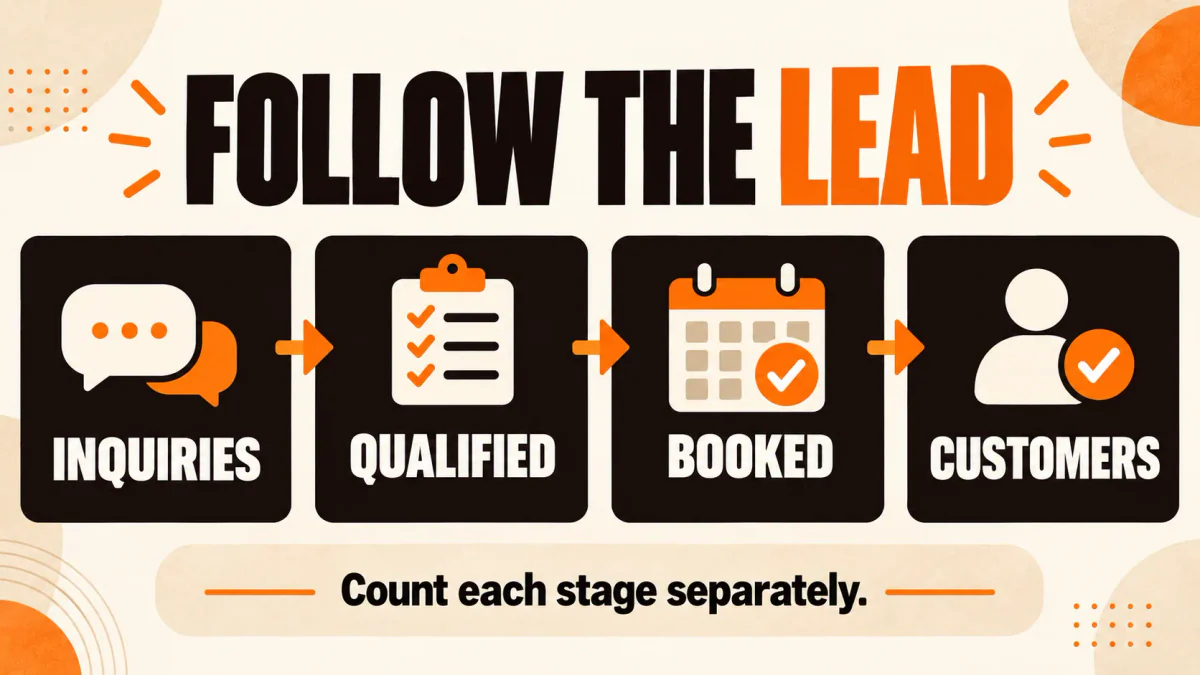
| Stage | What you're looking for |
|---|---|
| Visibility | Your business appears in a search or AI answer. |
| Website visit | Someone reaches your website from a source you can track. |
| Inquiry | A real person calls, submits a form, or contacts you. Clicking the phone number alone doesn't tell you a call connected. |
| Qualified inquiry | A potential new customer needs work you can help with. Leave out spam, duplicate contacts, and routine admin calls. |
| Booking | The appointment, consultation, or estimate is actually scheduled. |
| Business outcome | Your records confirm the person attended, the job happened, or they became a customer. |
Keep counts beside percentages and compare the same services, locations, and time periods. Allow similar time for people to become customers, too. Yesterday's inquiry hasn't had the same chance as one from six weeks ago.
One easy mistake: adding calls straight from a business listing to a website conversion rate. Those people may never have visited the website. Track those calls, but keep them separate when you're comparing website visits with website inquiries.
Then look at cost. Neither channel is free just because the visitor didn't click an ad. Agency work, content, tools, technical fixes, and staff time still cost money. If the same work helps Google and AI, call that a shared cost or explain how you split it.
Divide the cost you can reasonably assign to a channel by its qualified inquiries, or by the new customers you can verify. That gives you cost per qualified inquiry or cost per new customer. If there were none, say what you spent and that you got zero; don't manufacture a cost-per-customer figure.
Explain where the costs are uncertain. An exact-looking number built on guesses won't help you spend better.
Make AI earn the next dollar
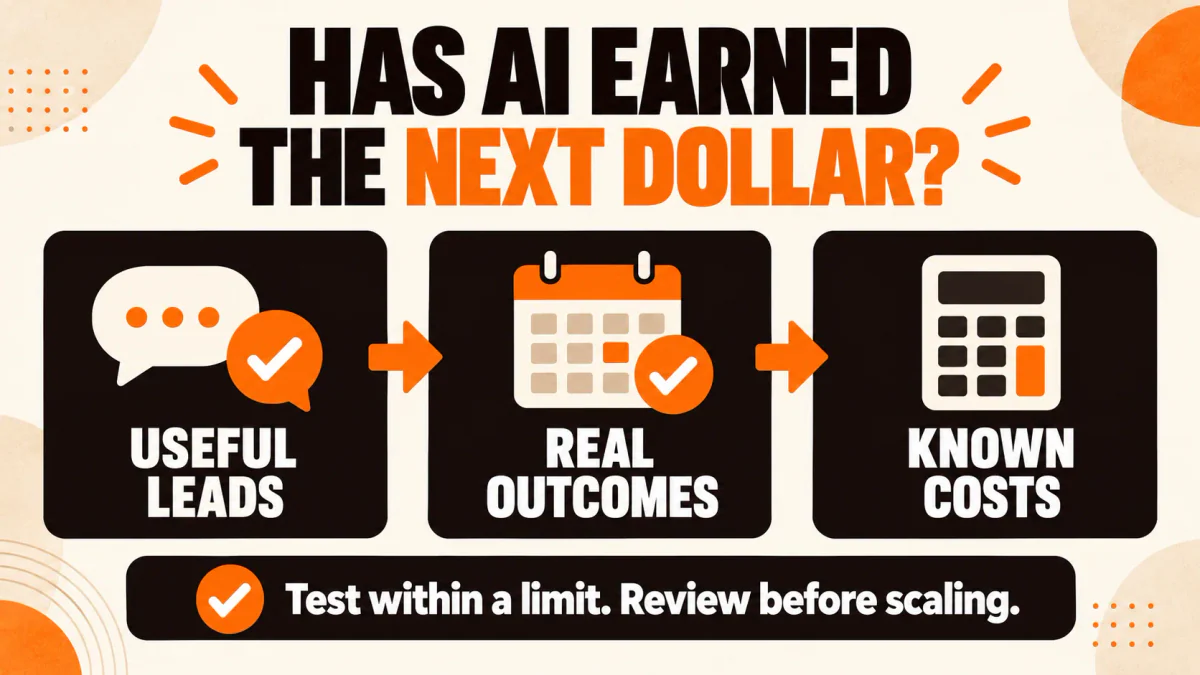
We wouldn't pull money away from work that's bringing in good customers just because a smaller channel has a better percentage. We'd look for a sensible way to test whether that smaller channel can bring in more of them.
That goes both ways. Google doesn't deserve a permanent budget just for being Google. If the program is underperforming, ask why. If AI referrals keep becoming valuable customers, take that seriously.
Where you go next depends on what's happening now:
- The tracking is a mess? Sort it out before comparing results. One person calling and submitting a form shouldn't become two leads.
- People see you but rarely get in touch? Check whether your information answers their questions and whether the call or form works.
- Good inquiries aren't becoming bookings? Look at response time, availability, objections, and what happens when your team takes over.
- A few AI referrals became good customers? Keep testing with a spending limit and enough time for people to make their normal buying decision.
- Good results keep coming at a cost that makes sense? Consider putting more into the work, then see whether that holds up.
Choose one service and market, agree on what work you'll do, set a budget you're comfortable with, and put a review date on the calendar. Decide what would make it worthwhile before you start. Keep notes on other changes, such as new prices, staffing, or ads, that could affect the results.
And be careful with the forecast. You can't order another hundred organic ChatGPT referrals the way you buy ad clicks. You're paying for work intended to help people discover you; how much traffic it creates, and when, is uncertain. Let the next round of results earn the next increase.
Check AI recommendations without turning screenshots into results
Check whether AI gets your facts right when you name the business, and whether it suggests you when someone asks for the service. Those are different questions.
Don't put too much weight on one answer. In Envoyra's fall 2026 software-category experiment, 536 of 680 question-and-assistant pairs changed their recommended brand list at least once across four weekly runs. That's about 79%.
It was a vendor experiment using particular API models and questions it didn't disclose. Two assistants didn't have web search, and the experiment didn't measure local leads. So it can't tell you how often your practice will appear. It does give you a good reason to check more than once.
Keep a short list of realistic questions about your service and location. Write down the date, tool, exact question, businesses recommended, sources cited, and any wrong information. Repeat those checks over time.
Keep that record separate from your leads report. Appearing in six of twenty checks tells you about those twenty answers. It doesn't mean 30% of local buyers saw you.
Bring the next report back to the business
At your next marketing meeting, pick one service you want more of and follow the inquiries through. How many were a good fit? How many booked? What happened after that, and what did it cost?
Maybe AI is bringing you a small number of excellent customers. Maybe Google is doing most of the work filling the schedule. Or maybe both are sending the right people, and those people are waiting too long for a callback.
Those are useful conversations because they lead somewhere. You can make a spending decision, fix a page, or improve follow-up instead of leaving the meeting with another screenshot to admire.
It's why our Local Growth Engine connects search, ads, reviews, website conversion, and follow-up. All of that work needs to help the right person find you, feel confident reaching out, and get a useful response.
If the reports are looking better but the schedule isn't, Help Me Get More Leads. We'll talk about the services you want to grow, who's contacting you now, and what happens when they do.
Frequently asked questions
Do AI leads convert better than Google leads?
They might for your business. In the Haynes analysis, ChatGPT visitors had a higher recorded conversion rate, but Google brought in far more conversions overall. We don't know the industries or what each site counted as a conversion. Check your own qualified inquiries, bookings, and customers before assuming the same pattern applies to you.
Should a local business move its SEO budget into AI search?
Only when your results give you a good reason to. Start by checking your tracking, business information, and contact process. Then try specific work with a spending limit and review date. A handful of good AI referrals is worth investigating, but it doesn't tell you how many more that work will produce.
How can I measure AI leads that later come through Google?
Save the tracked source and any discovery story the customer volunteers, then connect that inquiry to bookings and customers where you can. Count the person once. Keep confirmed AI referrals, reported AI influence, and the parts you don't know clear in the report; you won't be able to piece together every journey.
Is being recommended by ChatGPT proof that AI SEO is working?
It shows that you appeared in that particular answer. Checking regularly can tell you more about how often you're recommended and whether the information is right. To know whether the work is helping the business, you'll also need to look at useful inquiries, bookings, customers, and costs.