How We Helped a Chiropractic Practice Generate 6,852 Unique Calls and 830 Unique Forms
The documented result
6,852Unique tracked calls
830 Unique tracked forms
Results from our work together
The challenge
Turn local care searches into phone conversations while preserving online call and form paths.
What we connected
Care-specific search and Maps visibility, paid demand, reputation, tap-to-call access and source feedback.
Measurement note: Calls and forms use our Lead Dashboard's Unique classification.
Read the full story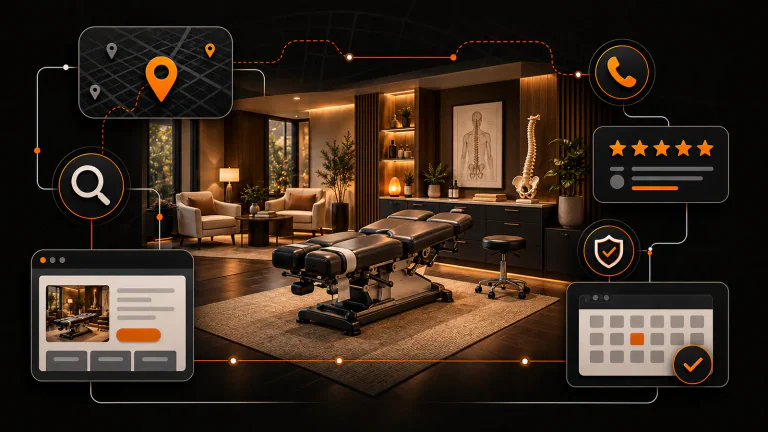
The call volume tells this story: we helped a chiropractic practice generate 6,852 Unique tracked calls, along with 830 Unique tracked forms, through an ongoing Local Growth Engine.
Chiropractic marketing often comes down to a very local, very immediate question: “Can this practice help with what is bothering me?” The person may be searching from a phone, comparing nearby providers, checking reviews, and deciding whether to call within a few minutes.
We built the marketing around that moment. Search visibility, service information, paid demand, reputation, and website conversion work all pointed toward calls and forms.
The phone call was the center of the journey
The practice did not need traffic for traffic's sake. It needed people to find the right service, recognize that the location made sense, get enough confidence to reach out, and connect with the practice.
That made the website's phone experience part of the marketing. A useful service page had to lead naturally to tap-to-call access on mobile. Contact details had to stay easy to find. Forms had to remain available for people who preferred to start online or reach out after office hours.
We treated calls and forms as separate signals in our Lead Dashboard, giving the practice a clearer view of how people chose to respond.
Local intent needs more than “near me”
Our Local SEO and Google Business Profile work supported discovery in Search and Maps. People may use a broad local phrase, but they also search around pain, injuries, and types of care. We connected those questions with service-focused pages rather than forcing every visitor through one general explanation.
Website SEO made each of those pages easier to find and follow. AI SEO organized the services, local facts, and related topics so search and AI systems could interpret the practice more clearly. That work also helped a person understand the care without decoding generic health copy.
The useful test was whether clear information helped the right person move toward a conversation.
Paid search joined an existing path
Google Ads helped the practice meet people already looking for care. The ad message, service page, and phone path needed to feel continuous. If the search suggested one concern and the page answered another, the call was less likely to happen.
We also used a review system to request feedback and monitor the practice's reputation. Press releases and mentions on authority websites added third-party context beyond the practice's own pages. Meta Ads could be added when the audience and offer made sense.
We used behavior to remove friction
Heatmaps and session recordings helped us see how people moved through service pages, where they looked for contact information, and where the path became awkward. Pop-ups gave us another way to surface a relevant next step. Those observations informed website conversion improvements and kept contact options useful.
The Lead Dashboard connected tracked response to organic search, Google Ads and other paid campaigns, direct visits, referrals, and other sources. With that view, campaign budget can follow the sources producing calls and forms instead of relying on a guess about which channel deserves credit.
When referral data identifies the source, the dashboard can also show visits and leads referred by ChatGPT, Claude, Perplexity, and other large language models. That capability helps us watch how discovery changes.
A phone-led engine still needs every part
The volume came through calls, but the call did not happen in isolation. Local SEO and the Google Business Profile helped the practice appear nearby. Website SEO and AI SEO made services easier to understand. Google Ads captured active demand. Reviews, press releases, and authority mentions supported trust. Conversion work kept calls and forms within easy reach. The Lead Dashboard brought those responses back into one view.
Seeing which sources produce tracked response gives us a practical basis for where to keep investing and where the journey needs work.
The result: 6,852 Unique calls and 830 Unique forms
The practice generated 6,852 Unique tracked calls and 830 Unique tracked forms.
This is an active client, and the engine keeps evolving with the practice's services, local demand, and the way people search. The goal stays straightforward: make the practice easy to find, easy to understand, and easy to contact.
How we counted it: Calls and forms use our Lead Dashboard's Unique classification.
Want a local marketing system built around more useful phone and form response? Let's talk.