

Key Takeaway
Learn how to separate tracked calls from qualified opportunities, diagnose weak-lead patterns, and decide what to check next without guessing.
The dashboard says, "Nice month."
The people answering the phone say, "Not really."
Neither side has to be wrong. The dashboard may be counting calls accurately while your team is judging whether those calls were useful. Those are different stages, and lumping them together creates a very flattering number that cannot answer a basic business question: did the phone ring with a real opportunity?
Call reporting is still useful. The definition underneath the report is what makes the number useful or misleading. Before you blame Google Ads, rewrite a service page, or decide the front desk dropped the ball, separate what you measured and look for a repeatable pattern.
A tracked call is not the same as a qualified opportunity
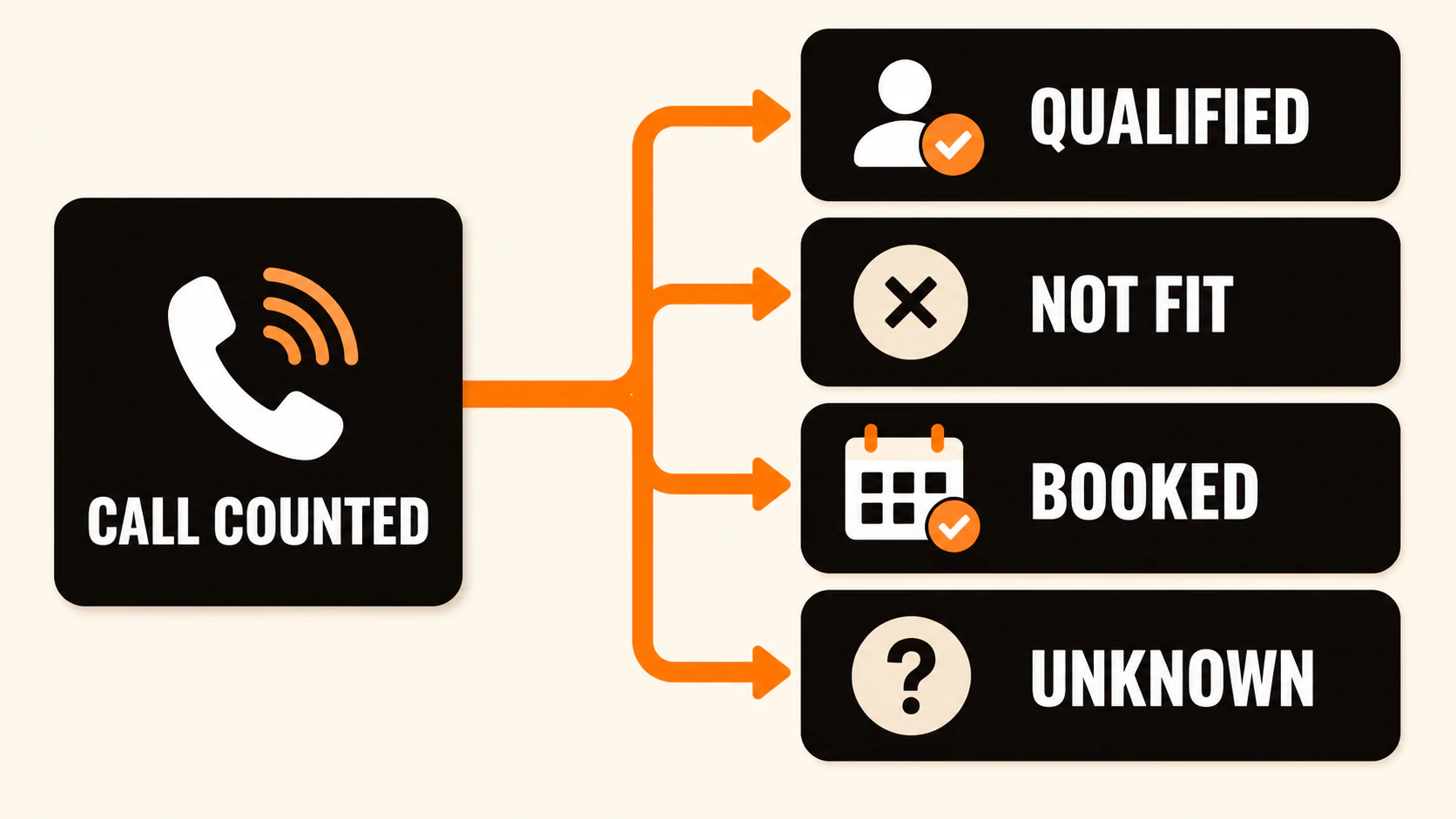
A phone call can move through several stages. Each stage answers a different question.
| Stage | What it tells you | What it does not prove |
|---|---|---|
| Call occurred | The phone rang or a tracked call action happened | The caller wanted a service you offer |
| Qualified conversation | The caller met your written service, area, and fit rules | The caller agreed to a next step |
| Booked next step | An estimate, consultation, appointment, or other defined next step was scheduled | The work happened or revenue was earned |
| Completed or reconciled outcome | The business recorded the later result it cares about | That one marketing source caused the result by itself |
The exact definitions belong to the business. A plumber, attorney, medical practice, and home remodeler should not share a borrowed definition of a qualified call. Write yours in plain language so two people can apply it the same way.
Google Ads separates conversion types and measurement paths. Its official documentation describes phone-call conversion actions and, when configured, later imported outcomes. It also advises creating separate conversion actions for separate kinds of conversions. Review Google's call measurement documentation and conversion tracking overview for the options documented for the current product. Availability and eligibility can vary by account, call source, country, settings, and other requirements.
That setup can make the measurement path more useful. It still does not turn every counted call into a qualified, booked, or completed outcome.
First, make sure the measurement path is not the problem
When the call report and staff feedback disagree, resist the urge to pick a side. Check how the number was assembled.
Start with the source, campaign, or page label. Is it present? Is it consistent? Does it point to the call you are reviewing, or has the trail gone cold somewhere between the website, call provider, advertising account, and business records?
Then check the event itself. A missed or abandoned call tells you the phone rang, but there was no useful conversation to judge. An existing customer asking for support may be a perfectly valid call and still not be a new-business opportunity. Check whether multiple conversion actions are counting the same business event at different stages.
Finally, ask whether the report stops too early. If your business counts the call in one system and records qualification or booking later in another, the two stages may not be connected. Google Ads documents ways to import later call outcomes when the required setup and records exist. If your later outcome is not connected, do not pretend the earlier call count answers the later question. Label the gap.
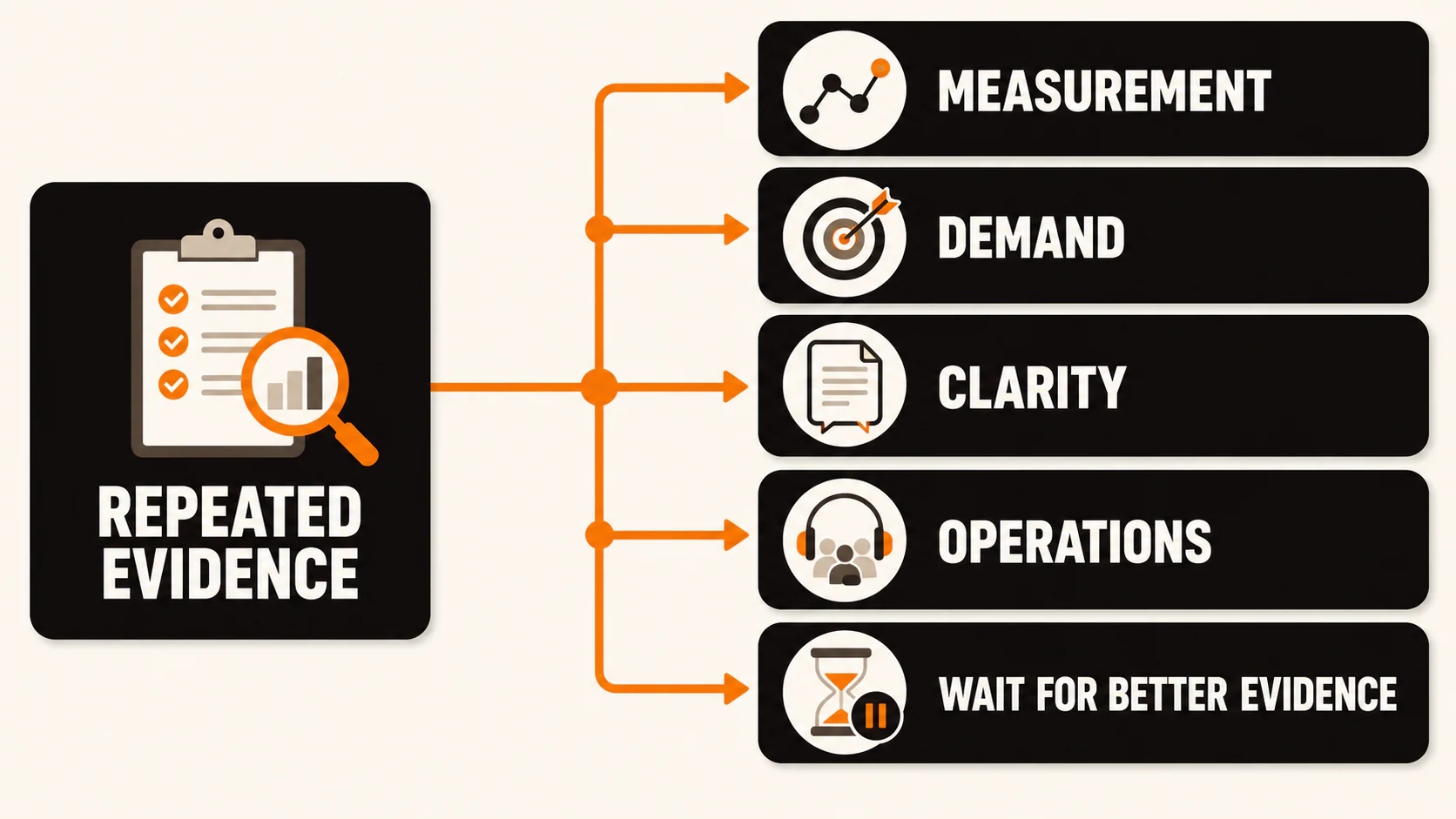
This is an audit of the path, not a full call-tracking installation guide. Find where the disagreement begins: measurement, demand, page or ad clarity, or what happens after the phone rings. Sometimes the whole problem is a measurement gap wearing a nicer outfit.
Use a call-review scorecard that forces useful answers
You do not need an elaborate scoring system. You need fields that prevent a reviewer from writing "bad lead" and moving on.
| Scorecard field | What to record |
|---|---|
| Source, campaign, or page | The available origin label, or unknown when it cannot be verified |
| Business-defined disposition | Wrong service, out of area, existing customer or support, spam or wrong number, missed or abandoned, qualified but not booked, booked next step, or another written category your business uses |
| Service and area fit | Fits, does not fit, or unknown, based on your stated offer and service area |
| Question or friction | The main question, objection, confusion, or missing information in neutral language |
| Handling or routing issue | Missed call, transfer problem, unclear next step, follow-up gap, or none observed |
| Confidence | Confirmed from the permitted record, reviewer judgment, conflicting evidence, or unknown |
| Next check | The smallest investigation justified by the repeated pattern |
A disposition is a business outcome label, not a mood. "Price shopper" is usually too vague to help. Did the person need the right service? Were they in the service area? Did they decline a next step, or was no useful next step offered? Those distinctions point to different checks.
Keep unknowns visible. Forcing every call into a confident category makes the spreadsheet cleaner and the decision worse.
What the repeated pattern tells you to check next
One odd call is worth inspecting. It is not permission to rebuild a campaign. Look for a repeatable pattern using the same labels, then route the pattern to the smallest sensible investigation.
| Pattern branch | What you may observe repeatedly | Smallest justified next check | Guardrail |
|---|---|---|---|
| Measurement mismatch | Missing source labels, duplicate actions, calls counted at different stages, or later outcomes not reconciled | Audit the event, source label, routing, and conversion-action definitions | Do not judge a channel from a broken or mixed measurement path |
| Demand mismatch | Calls concern services or locations the business does not serve, with matching source or search context | Investigate the relevant query, ad, targeting, page, or Business Profile attribution | One call does not justify a keyword, targeting, or profile change |
| Clarity gap | Qualified callers repeatedly need basic information the relevant page or ad should make clear | Check the promise, service details, area, eligibility, or next step on that asset | A caller question is evidence of friction, not proof that a page edit will improve results |
| Operations problem | Qualified calls are missed, routed poorly, handled inconsistently, or left without a clear follow-up owner | Review call handling, availability, routing, and follow-up ownership | Do not turn an intake problem into an SEO or Ads verdict |
| Insufficient or conflicting evidence | Labels disagree, attribution is incomplete, or several explanations fit | Correct the definitions or collect more comparable records | "Do nothing yet" is a decision when the evidence is thin |
If repeated questions point to the offer itself, this guide to clarifying your offer for more qualified leads is the better next read. Keep the jobs separate: this article identifies the likely branch; that guide goes deeper on the message.
Do not let one strange call rewrite the campaign
Call review is useful partly because conversations are specific. That specificity is also dangerous. A memorable call can feel more representative than it is.
Decide what counts as a pattern before you go hunting for one. There is no universal call count, percentage, or review cadence that fits every local business. Call volume, service mix, seasonality, locations, and the risk of the proposed change all affect what is enough.
Use the same disposition definitions across the records you compare. Name the review period. Keep the source and page labels stable where possible. If the evidence supports a change, change one material thing where feasible and write down the date you will check it again.
A review date cannot promise a result. Its job is to stop a reasonable test from becoming a permanent setting nobody remembers approving.
Where AI call summaries help, and where they can fool you
An AI summary may help organize call content you are permitted to use. The available summaries, labels, and classifications depend on the provider, account, call source, and enabled features.
But the summary did not write your qualification rule. It can misread the conversation, miss context, or assign a tidy label to an ambiguous call. Humans still need to define the categories, spot-check the output, correct errors, and keep unknowns intact.
Google Ads documents recording-based lead-quality analysis for eligible calls, with account, country, call source, recording, and terms restrictions. That is why the old blanket claim that advertising platforms cannot analyze conversations is too broad. The narrower and more useful point is this: a counted conversion action does not, by itself, prove your business's qualified or completed outcome.
Before recording, transcribing, retaining, sharing, or using call content, verify the consent rules that apply, along with industry or contract obligations, vendor settings, access controls, retention choices, and sharing practices. This is not legal advice. If the permitted use is unclear, work from allowed call logs and manually recorded outcomes instead.
Turn the diagnosis into a small decision
End the review with five lines:
- Record the observed pattern using the written labels.
- Name the call records, source labels, pages, or later outcomes that support it, along with what remains unknown.
- Choose the likely branch: measurement, demand, clarity, operations, or insufficient evidence.
- Assign the smallest next check to an owner.
- Set a review date and state what the evidence cannot establish.
That is enough for a diagnostic handoff. When you are ready to turn the diagnosis into an ongoing system, use the complete local SEO and Google Ads call-tracking feedback loop. It covers the implementation process this article deliberately does not repeat.
Frequently asked questions
What is a qualified call?
A qualified call meets the business's written criteria for the service, location, need, and other legitimate fit requirements. Qualification should be separate from booking and completion. A caller can be qualified and still decide not to schedule.
Does a longer call mean a better lead?
No universal duration proves quality. A long call may involve support for an existing customer. A short call may come from a well-informed prospect ready to book. Duration can be one field to inspect, but it needs the call's disposition and later outcome beside it.
Can call tracking hurt local SEO?
This research does not support a universal yes or no. Implementation choices, provider behavior, number display, and the surfaces involved need a separate technical review. Do not treat a vendor's broad "SEO-safe" claim, or this diagnostic article, as approval for a specific setup.
Should every call be recorded or transcribed?
No blanket rule fits every business or jurisdiction. Verify consent, industry and contract obligations, provider settings, access, retention, and sharing before using recordings or transcripts. If you cannot confirm permitted use, rely on allowed call logs and manually recorded outcomes.
How often should calls be reviewed?
Use a cadence that produces enough comparable evidence for the decision without overwhelming the owner. The right interval depends on call volume, service mix, and the cost or risk of acting. Choose the cadence in advance and use the same definitions each time.
Can Google Ads optimize toward qualified calls?
Google Ads documents separate phone-call conversion actions, recording-based lead-quality measurement for eligible calls, and ways to import later outcomes when configured. Whether an account can and should use those options depends on eligibility, call source, data quality, consent, technical setup, and the campaign's conversion-goal settings. A qualified-call label still needs a clear business definition.
Better reporting starts with a better definition
A report can be accurate and still be inadequate for the decision in front of you. Call volume tells you that activity happened. It does not settle fit, booking, completed work, or cause.
Define the stages. Label calls consistently. Follow repeated evidence to the smallest next check, and leave thin evidence alone until it earns a decision. That is less exciting than declaring a campaign winner from one dashboard tile. It is also a lot more useful.
If your reports and phone outcomes still refuse to agree after you audit the definitions and measurement path, contact YEAH! Local for help finding the gap.
Last updated