
Key Takeaways
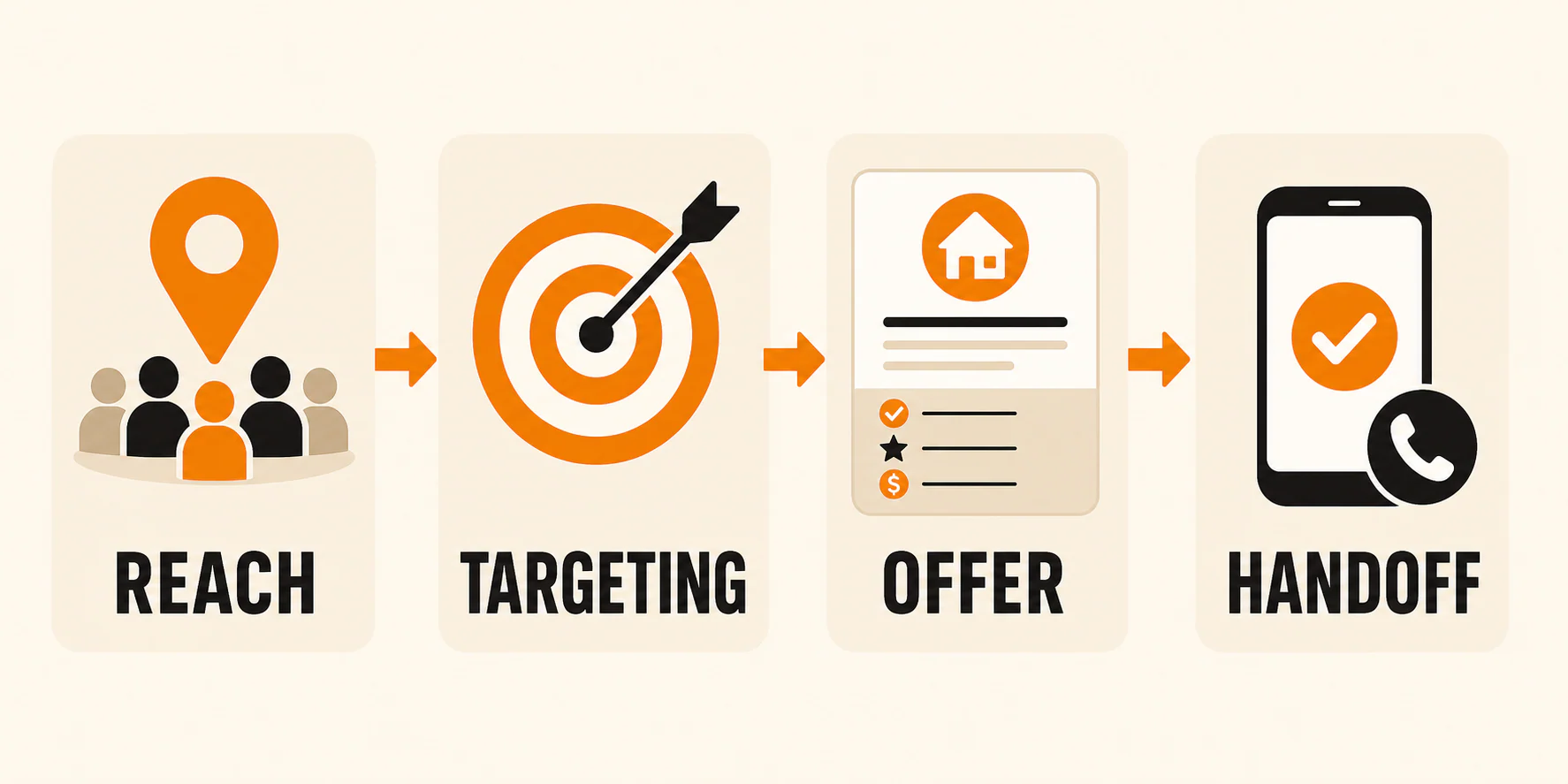
- Sometimes the lead problem is not lead volume. It is offer clarity.
- More traffic can actually make the problem worse if people do not understand what they are calling about.
- This is common with businesses that sell a model, not just a service: concierge medicine, membership-based care, functional medicine, specialty clinics, med spas, wellness practices, senior care, and premium home services.
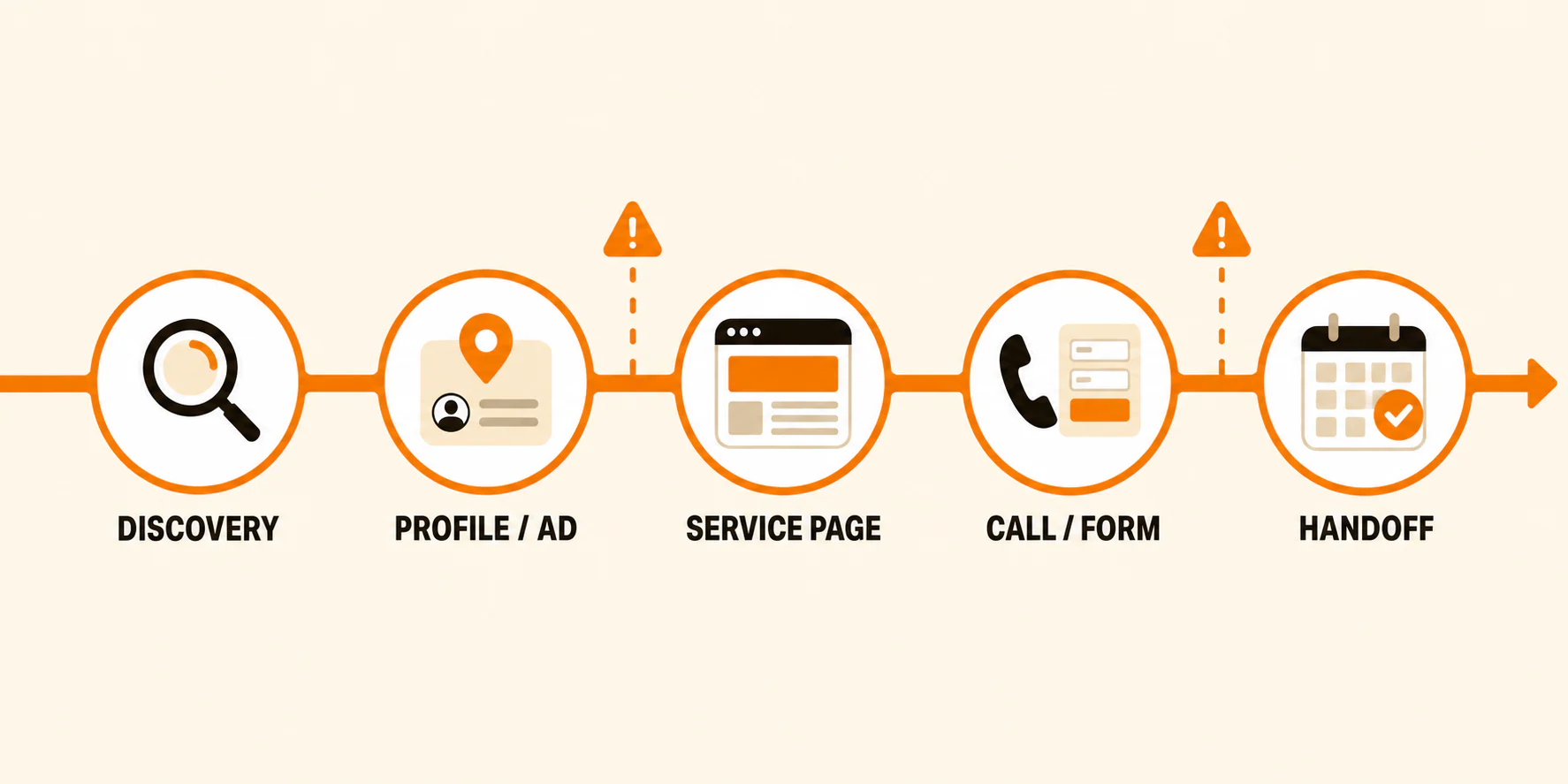
- Customers do not always visit your website before calling. They may find you through Google Maps, ads, AI answers, insurance directories, review sites, referrals, or third-party listings.
- Your offer has to be clear everywhere the decision happens, not just on your homepage.
- A confusing offer creates more unqualified calls, more frustrated staff, weaker close rates, and misleading marketing reports.
- The best question is not only, “Where did this lead come from?” It is, “Did this lead understand us before they called?”
- Better marketing starts with plain-English positioning: who you help, what you offer, how your model works, who it is for, who it is not for, and what the next step looks like.
The Lead Problem Is Not Always a Traffic Problem
When local businesses are unhappy with leads, the first instinct is usually to get more visibility.
More SEO.
More ads.
More Google Business Profile activity.
More content.
More traffic.
More calls.
And sometimes, that is exactly what the business needs.
But not always.
Sometimes the problem is not that too few people are finding the business.
Sometimes the problem is that the people who find the business do not understand what they found.
They call expecting one thing.
The business offers something else.
The lead technically came in, but the conversation starts with confusion.
That is where lead quality begins to break down.
The marketing report may say, “New lead.”
The front desk may say, “Bad fit.”
The owner may say, “Why are we getting so many calls from people who do not understand what we do?”
That is the gap.
More traffic will not fix a confusing offer.
In fact, more traffic can pour gasoline on the problem.
This Happens Most When You Sell a Model, Not Just a Service
Some local businesses are easy to understand.
A person searches “roof repair Marietta” because they need roof repair.
A person searches “Botox near Buckhead” because they want Botox.
Even then, messaging matters.
But the offer is fairly familiar.
Confusion becomes more common when a business sells a model, process, or premium approach that is different from what people expect in the category.
Examples include:
- Concierge medicine
- Membership-based primary care
- Functional medicine
- Integrative medicine
- Medical weight loss programs
- Hormone therapy clinics
- Specialty wellness clinics
- Cash-pay healthcare
- Med spas with consultative treatment plans
- Senior care agencies with multiple care models
- Premium home service companies
- Design-build services
- Specialty insulation or energy-efficiency services
- High-end remodeling or home improvement providers
These businesses are not just selling the service.
They are selling a way of delivering the service.
That model may be obvious inside the business.
It may be completely unclear to the customer.
That is where the trouble starts.
The Customer Does Not Always See Your “Explanation Page”
A lot of businesses assume the website gets the final word.
It does not.
The customer journey is messier than that.
A patient may find a physician through an insurance directory and call immediately.
They may never visit the website.
They may never read the Google Business Profile description.
They may never see the page that explains the membership model.
A person looking for functional medicine may ask ChatGPT or Google AI for options, then search the brand name later.
A med spa prospect may see a Google ad, skim reviews, and call without reading the treatment page.
A senior care decision-maker may find a home care agency through Maps and call from the profile.
A premium home service prospect may click a Local Services Ad and call before understanding what makes the company different.
From the business side, the lead came in.
From the sales side, the person may be confused, underinformed, price-shocked, or not a fit.
That is not always a bad lead.
Sometimes it is a poorly prepared lead.
That distinction matters.
A bad-fit lead is someone you should not have attracted.
A poorly prepared lead is someone who might have been a good fit if your offer had been clearer earlier.
The Real Problem: Your Offer Does Not Travel
A strong offer has to travel.
It has to make sense across every place a customer may encounter your business:
- Google Business Profile
- Google Search results
- Google Ads
- Meta Ads
- Local Services Ads
- Homepage
- Service pages
- Location pages
- AI-generated answers
- Review sites
- Insurance directories
- Healthcare directories
- Aesthetic directories
- Senior care directories
- Referral sources
- Phone scripts
- Text follow-up
- Intro videos
- Email follow-up
- Intake forms
If the offer only makes sense on one page of your website, that is not enough.
The customer may never see that page.
And even if they do, they may skim it.
Your positioning has to survive the real-world buying journey.
That means your message must be clear enough for:
- a customer to understand
- a staff member to explain
- a search engine to categorize
- an AI system to summarize
- a directory listing to represent
- a review reader to validate
- a phone script to reinforce
That is the standard now.
Not clever.
Clear.
“Concierge” Is a Great Example
Inside a medical practice, the word “concierge” may feel obvious.
To the business, it means longer visits, better access, more personal care, fewer rushed appointments, and a membership-based model.
To the patient, it may mean:
- luxury medicine
- expensive care
- not insurance-based
- direct access to a doctor
- VIP care
- something they do not understand
- something they assume is not for them
That is why plain-English positioning matters.
“Concierge medicine” may be the category term.
But “membership-based primary care” may explain the model faster.
A stronger explanation might be:
“Our practice offers membership-based primary care for patients who want longer appointments, easier access to their doctor, and a more personal healthcare relationship than traditional high-volume care.”
That one sentence does more work than “concierge medicine” alone.
It explains:
- the model
- the audience
- the value
- the contrast
- the expectation
That is what confusing offers need.
Not more jargon.
More translation.
This Is Not About Dumbing Down the Business
Clear positioning is not dumbing down your offer.
It is respecting the buyer.
The customer is not inside your business every day.
They do not know your internal language.
They do not understand your model yet.
They may be comparing you to providers who look similar on the surface.
They may be nervous about cost.
They may not know what questions to ask.
They may be making a decision quickly.
They may be calling while stressed, skeptical, overwhelmed, or uncertain.
Your job is not to impress them with industry language.
Your job is to help them understand whether they are in the right place.
Clear language does not make a premium offer feel cheap.
Done well, it makes a premium offer feel safer.

The Cost of a Confusing Offer
A confusing offer creates problems across the entire lead generation system.
1. More Unqualified Calls
People call before understanding basic requirements.
For a concierge medical practice, that may mean people call expecting insurance-based primary care.
For a cash-pay wellness clinic, it may mean people call expecting a quick prescription.
For a med spa, it may mean people call expecting a discount treatment without understanding the consultative process.
For a premium home service company, it may mean people call expecting the cheapest option, even though the business sells higher-quality, higher-touch work.
2. More Staff Frustration
The front desk has to explain the model over and over again.
That gets exhausting.
The team starts saying things like:
“They never read the website.”
“They do not understand what we do.”
“These leads are terrible.”
But the better question is:
“Where did they enter the journey, and was the offer clear there?”
3. Lower Close Rates
Confused prospects are harder to convert.
They ask more basic questions.
They object earlier.
They compare incorrectly.
They hesitate.
They may be a good fit, but the conversation starts too far behind.
4. Misleading Marketing Reports
The dashboard may show calls, form fills, or conversions.
But the business may know many of those leads were not truly qualified.
That is why lead volume alone is dangerous.
A lead is only valuable if the person understands enough to take the right next step.
5. More Waste in Paid Ads
Paid traffic amplifies whatever is already there.
If the offer is clear, ads can scale it.
If the offer is confusing, ads scale confusion.
That is why more ad spend can sometimes create more work without creating better customers.
Case Study 1: The Concierge Medical Practice Getting “Bad Leads” From Good Visibility
A concierge medical practice wanted more new patient enrollments.
The marketing was working in one sense.
The phone was ringing.
People were finding the practice through Google, directories, and referrals.
But many callers were not a fit.
Some expected a traditional insurance-based doctor.
Some asked if the practice accepted every major insurance plan.
Some wanted a one-time urgent appointment.
Some did not understand the membership fee.
From the report, these looked like leads.
From the front desk, they felt like wasted conversations.
The issue was not just targeting.
The issue was that the model was not clear enough at every entry point.
The website explained concierge care, but many callers never reached that page.
The Google Business Profile did not make the membership model obvious.
Some directory listings described the practice like a traditional primary care office.
The phone script explained the model, but only after the person had already called with the wrong expectation.
What changed
The practice updated the plain-English offer across the customer journey:
- Google Business Profile description clarified “membership-based primary care”
- Website headlines explained longer visits, better access, and a membership model
- Service pages answered pricing and insurance questions earlier
- Directory descriptions were rewritten to reduce confusion
- The front desk script opened with a simple fit statement
- Follow-up texts linked to a page explaining how the membership works
- Ads used clearer language instead of only “concierge doctor”
The new positioning was not colder or less premium.
It was clearer.
The lesson
The practice did not just need more calls.
It needed more callers who understood the model before calling.
Once the offer traveled better, lead quality improved.
Case Study 2: The Functional Medicine Clinic With Great Services and Vague Messaging
A functional medicine clinic offered a thoughtful, lab-guided approach.
The team helped patients with fatigue, thyroid concerns, weight changes, gut health, hormone issues, inflammation, and metabolic health.
But the website mostly said things like:
- “Root-cause care”
- “Whole-person wellness”
- “Personalized treatment”
- “Helping you feel your best”
Those phrases were not wrong.
They were just not enough.
Prospective patients did not always understand what the clinic actually did.
Some thought it was primary care.
Some thought it was nutrition coaching only.
Some expected insurance to cover everything.
Some wanted a quick prescription without a deeper evaluation.
Some were a great fit, but they needed a clearer explanation of the process.
What changed
The clinic rewrote the offer in plain English:
“We help patients who feel dismissed, stuck, or frustrated by unresolved symptoms take a deeper look at their health through advanced labs, longer consultations, and personalized wellness plans.”
Then the clinic separated major services into clearer pages:
- Functional Medicine Consultation
- Hormone Optimization
- Thyroid Support
- Medical Weight Loss
- Gut Health Support
- Nutrition Counseling
Each page explained:
- who it was for
- who it was not for
- what the first appointment involved
- whether labs were reviewed
- what pricing or membership may include
- what outcomes were realistic
- what questions patients usually ask
- what to do next
The lesson
The clinic did not need to sound more sophisticated.
It needed to make the path easier to understand.
When the offer became clearer, better-fit patients were more likely to self-select before calling.
Case Study 3: The Med Spa Attracting Price Shoppers Instead of Consultation-Ready Patients
A med spa was frustrated with lead quality.
The ads drove inquiries.
The website got traffic.
The Instagram looked strong.
But too many calls sounded like this:
“How much is Botox?”
“How much for one syringe?”
“Do you have any specials?”
“What is your cheapest option?”
Price questions are normal in aesthetics.
But the issue was that the entire front-end message made the clinic sound like a treatment menu instead of a consultative aesthetic practice.
The business wanted patients who valued natural-looking results, provider expertise, safety, and a personalized plan.
But the marketing mostly promoted services and prices.
What changed
The med spa repositioned the offer around the model, not just the treatment.
Instead of only saying:
“Botox and filler appointments available.”
The site and ads shifted toward:
“Natural-looking injectable treatments guided by experienced providers, conservative planning, and a consultation-first approach.”
The service pages added:
- who is a good candidate
- what first-time patients should expect
- why consultation matters
- how providers create natural-looking results
- what affects pricing
- why cheaper is not always better
- how to book the right appointment
The front desk script also changed.
Instead of answering price and stopping, the team framed the next step:
“Pricing depends on your goals and the number of units or product needed, but the best first step is a consultation so the provider can recommend what makes sense for your face, your goals, and your comfort level.”
The lesson
The clinic did not eliminate price questions.
It changed the context around them.
Better-fit patients still asked about cost, but they understood the value of the consultation before comparing prices.
Case Study 4: The Premium Home Service Company Getting Calls From the Wrong Buyer
A premium home service company offered high-quality work, experienced technicians, strong materials, and a better process.
But the market category made them look like everyone else.
On Google, they appeared beside cheaper competitors.
The customer saw the category and assumed every provider was basically the same.
So the calls were filled with:
“How much?”
“Can you beat this quote?”
“What is the cheapest option?”
“Why are you more expensive?”
The business did not have a traffic problem.
It had a positioning problem.
The offer did not clearly explain why their work was different before the customer called.
What changed
The company clarified its offer across search, ads, and service pages:
- what made the process more thorough
- what was included that cheaper competitors often skipped
- what materials or methods were used
- what problems the service prevented
- what warranties or guarantees applied
- what kind of customer was the best fit
- when they were not the cheapest option and why
They did not hide the premium positioning.
They explained it.
The lesson
Premium businesses should not try to look cheaper.
They should make the value easier to understand before the call.
The Offer Clarity Test
Here is the simplest way to diagnose the problem.
Look at every place a customer can make a decision before talking to you.
Then ask:
“Would a normal person understand what we offer, who it is for, what it requires, and whether they are a fit?”
Audit these touchpoints:
| Touchpoint | What the Customer Needs to Understand |
|---|---|
| Google Business Profile | What you do, where you are, who you serve, and what makes the model different |
| Homepage | The plain-English offer and the clearest next step |
| Top service page | The service, the process, fit, pricing factors, FAQs, and proof |
| Google Ads | The offer, not just the category |
| Meta Ads | The problem, audience, and expected next step |
| Directory listing | Whether you are traditional, membership-based, cash-pay, specialty, premium, or consultative |
| AI answer snippets | Clear facts about your services, model, location, and fit |
| Review sites | Proof from real customers that supports your positioning |
| Front desk script | A simple explanation of the offer before qualification |
| Intro videos | A quick human explanation of who the business is for |
| Follow-up texts | A link or short explanation that reinforces the model |
If the offer is only clear in one of these places, the customer journey is fragile.
The offer has to travel.
The Plain-English Offer Formula
A clear offer does not need to be complicated.
Use this formula:
We help [specific audience] with [specific problem or goal] through [specific service/model] so they can [desired outcome], without [common frustration or confusion].
Examples:
Concierge Medicine
“We help busy adults and families get more personal primary care through a membership-based model with longer visits, easier doctor access, and a stronger focus on prevention.”
Functional Medicine
“We help patients who feel stuck with fatigue, weight changes, hormone concerns, or gut issues take a deeper look at their health through advanced labs, longer consultations, and personalized wellness plans.”
Med Spa
“We help patients achieve natural-looking aesthetic results through consultation-first Botox, filler, and skin treatments performed by experienced providers.”
Medical Weight Loss
“We help patients who want medical support for weight loss understand their options through provider-guided consultations, lab review, medication management when appropriate, and ongoing follow-up.”
Home Care
“We help families arrange non-medical in-home care for aging loved ones who need support with daily routines, companionship, personal care, or respite.”
Premium Home Services
“We help homeowners who want the job done right avoid shortcuts through a more thorough inspection, higher-quality materials, and a clear process from estimate to completion.”
This is not sales fluff.
This is clarity.
Why Category Terms Are Not Enough
Many local businesses rely too heavily on category terms.
Examples:
- Concierge doctor
- Functional medicine
- Med spa
- Medical weight loss
- Hormone therapy
- Home care
- Premium remodeling
- Specialty clinic
The problem is that category terms mean different things to different people.
“Home care” may mean non-medical companion care to the business, but skilled nursing to the caller.
“Medical weight loss” may mean GLP-1 medication to one patient, nutrition coaching to another, and surgery to another.
“Functional medicine” may mean lab-guided care to the clinic, but supplements and vague wellness to the patient.
“Concierge medicine” may mean membership-based primary care to the practice, but luxury urgent care to the caller.
The category gets attention.
The plain-English explanation creates understanding.
You need both.
Your Website Is Not the Only Place That Explains the Offer
This is one of the biggest mistakes in local marketing.
Businesses put the best explanation on the website and assume everyone sees it.
But customers may enter through:
- Maps
- Ads
- AI answers
- Local directories
- Insurance directories
- Review platforms
- Social media
- Referrals
- Branded search
- A phone call
That means your offer has to be repeated clearly across the ecosystem.
Not copied word-for-word everywhere.
But consistent enough that every path leads to the same understanding.
A person should not get one impression from your ad, another from your Google Business Profile, another from your website, and another from the front desk.
That inconsistency creates doubt.
Clear offers create confidence.
The Attribution Lesson: Influence Is Not Always Clean
There is another layer here: attribution.
A business may restart Google Ads and then see new patient enrollments increase.
That does not mean every enrollment came directly from the ads.
The ads may have influenced the journey.
They may have made the name familiar.
They may have appeared before the organic listing.
They may have reminded someone to search again later.
They may have pushed a patient to read reviews, visit the website, and call from the Google Business Profile.
That influence matters.
But it is different from a clean conversion report.
This is why local businesses need to improve both sides at once:
- clarify the offer
- tighten the tracking
Do not only ask:
“Where did this lead come from?”
Ask:
“Did this lead understand us before they called?”
That question can explain a lot.
A lead may be attributed to Google Business Profile, but influenced by ads.
A lead may come from branded search, but started with an AI answer.
A lead may come from a directory, but closed because reviews explained the experience.
A lead may call from Maps without ever seeing the page that explains your model.
Attribution tells you the path.
Offer clarity tells you whether the person was ready for the conversation.
You need both.
How to Tell If Your Offer Is Confusing
Your offer may be unclear if your team frequently hears:
- “Do you take insurance?”
- “I thought this was a regular doctor’s office.”
- “Wait, there is a membership fee?”
- “I thought this was covered.”
- “What exactly do you do?”
- “Is this medical or wellness?”
- “Do you offer one-time visits?”
- “Is this the same as assisted living?”
- “Do you send nurses or caregivers?”
- “Why is this more expensive?”
- “I thought the consultation was free.”
- “I did not realize I had to book first.”
- “I just want the cheapest option.”
- “I thought you served my area.”
These questions are not automatically bad.
But if they show up repeatedly, your marketing is not pre-educating people well enough.
Your team is doing work your messaging should have done earlier.
What to Fix Before Buying More Traffic
Before increasing ad spend, publishing more content, or adding another directory, fix the clarity layer.
1. Rewrite the Above-the-Fold Message
Your homepage should quickly explain:
- what you do
- who you help
- where you serve
- how your model works
- what the next step is
Weak:
“Personalized care for a healthier life.”
Better:
“Membership-based primary care in Alpharetta for patients who want longer visits, easier doctor access, and a more personal healthcare experience.”
2. Update Your Google Business Profile
If customers call directly from Maps, your profile has to do more work.
Add clarity to:
- business description
- services
- appointment link
- photos
- Q&A
- posts
- review responses
For a membership-based practice, say it.
For a cash-pay clinic, explain it carefully.
For a consultative med spa, reinforce consultation-first treatment.
For a senior care agency, clarify in-home care versus facility placement.
3. Fix Your Top Service Pages
Your service pages should answer:
- What is this?
- Who is it for?
- Who is it not for?
- What does it cost or require at a basic level?
- What happens first?
- What makes your approach different?
- What should someone do next?
4. Improve Directory Listings
Directories often create confusion because they flatten every business into the same category.
Do not let a directory describe a membership-based practice like a traditional insurance-based clinic.
Do not let a home care listing imply skilled nursing if you provide non-medical support.
Do not let a med spa listing reduce a consultative clinic to a discount injectable provider.
Rewrite every listing you can.
5. Align Ads With the Real Offer
Ads should not attract clicks at the expense of fit.
A vague ad may get more leads.
A clear ad may get better leads.
Example:
Weak:
“Top Doctor Near You”
Better:
“Membership-Based Primary Care With Longer Visits and Easier Doctor Access”
Weak:
“Botox Specials Available”
Better:
“Natural-Looking Botox Consultations With Experienced Injectors”
Weak:
“Senior Care Help”
Better:
“In-Home Care for Seniors Who Need Daily Support, Companionship, or Respite”
6. Give the Front Desk a Plain-English Script
The front desk should not have to invent the explanation every time.
Give them a simple opening:
“Just so you know, our practice is membership-based, which means patients pay an annual or monthly fee for longer visits, easier access, and a more personal primary care relationship. I’m happy to walk you through how it works.”
Or:
“We provide non-medical in-home care, which means our caregivers can help with daily routines, companionship, personal care, and respite, but we do not provide skilled nursing.”
Or:
“Our injectable appointments start with a consultation so the provider can understand your goals, recommend the right approach, and give you pricing based on what you actually need.”
That kind of clarity saves everyone time.
The Offer Clarity Scorecard
Use this table to audit your top lead sources.
| Lead Source | What the Prospect Sees First | Is the Offer Clear? | What May Be Confusing? | What to Fix |
|---|---|---|---|---|
| Google Business Profile | Category, reviews, photos, services | Yes / No | Model, pricing, fit, service details | Update description, services, Q&A |
| Google Ads | Headline and landing page | Yes / No | Too broad or too category-based | Add model, audience, and next step |
| Organic Search | Title tag, meta description, page | Yes / No | Page does not explain offer fast enough | Rewrite title, intro, FAQs |
| AI Answers | Summarized facts from the web | Yes / No | Website lacks clear facts | Add plain-English service/model content |
| Directory Listing | Category and short bio | Yes / No | Listing creates wrong expectations | Rewrite profile and add fit language |
| Reviews | Patient/customer experiences | Yes / No | Reviews are generic | Ask for service-specific experience |
| Phone Call | Staff explanation | Yes / No | Script starts too late or too vague | Add opening fit statement |
| Referral | Word-of-mouth summary | Yes / No | Referrer may explain it incorrectly | Create short shareable offer statement |
A confusing offer usually shows up in more than one place.
Fix the pattern, not just one page.
The Simple Test: Would a Normal Person Understand This?
This is the test.
Not your marketing team.
Not your provider.
Not your best customer.
Not someone who already knows the industry.
A normal person.
Someone busy.
Someone skeptical.
Someone comparing options.
Someone who has never heard your explanation before.
Ask whether they can quickly understand:
- What do you do?
- Who is this for?
- Is this for me?
- What does it require?
- Is there a membership, consultation, estimate, or application?
- Is insurance involved?
- Is this premium, cash-pay, covered, urgent, elective, ongoing, or one-time?
- What happens first?
- What should I do next?
If they cannot answer those questions, the offer is not clear enough.
More traffic will not fix that.
Better Lead Generation Starts Before the Lead
Most businesses think lead generation starts when someone fills out a form or calls.
It starts earlier.
It starts when the customer first forms an expectation.
That expectation may come from:
- the search result
- the Google Business Profile
- the ad headline
- the category label
- the review language
- the directory listing
- the AI answer
- the referral source
- the first sentence on the page
If that expectation is wrong, the call starts with friction.
If that expectation is clear, the call starts with momentum.
That is the difference between a lead and a qualified opportunity.
The Local Growth Engine Lesson
At YEAH! Local, this is why we look beyond traffic.
Traffic matters.
Rankings matter.
Ads matter.
Visibility matters.
But none of it works as well as it should if the offer is unclear.
The Local Growth Engine needs every part of the system working together:
- SEO brings in demand.
- Ads create and capture attention.
- Google Business Profile converts local intent.
- Reviews build trust.
- Service pages explain the offer.
- AI visibility reinforces facts.
- Call tracking reveals confusion.
- Front desk scripts improve conversion.
- Follow-up keeps qualified leads moving.
When the offer is clear, the whole system gets stronger.
When the offer is confusing, every channel has to work harder.
Action Step: Audit Your Top Three Lead Sources
Here is the practical exercise.
Pick your top three lead sources.
For many local businesses, that may be:
- Google Business Profile
- Google Ads
- Organic service pages
- Directory listings
- Referrals
- Insurance listings
- Meta Ads
- AI search visibility
Now write the plain-English version of your offer beside each one.
Example:
“We are a membership-based primary care practice for patients who want longer visits, easier doctor access, and a more personal healthcare relationship.”
Or:
“We provide non-medical in-home care for seniors who need help with daily routines, companionship, personal care, or respite.”
Or:
“We offer consultation-first aesthetic treatments for patients who want natural-looking Botox, filler, and skin results from experienced providers.”
Then ask:
“Would the customer understand this before calling?”
If not, update the listing, page, ad, profile, or script.
Do not wait for the front desk to fix confusion that marketing created.
Final Thought
More traffic will not fix a confusing offer.
It may make the phone ring more.
It may make the dashboard look better.
It may create more activity.
But if people do not understand what they are calling about, your team will spend more time sorting through confusion instead of converting qualified opportunities.
The goal is not just more leads.
The goal is better-informed leads.
People who understand the model.
People who know whether they are a fit.
People who are ready for the next step.
That starts with clarity.
Not just on your website.
Everywhere the decision happens.
FAQ's
Why does more traffic sometimes create worse lead quality?
More traffic amplifies whatever message is already in the market. If your offer is clear, more traffic can create more qualified opportunities. If your offer is confusing, more traffic can create more calls from people who misunderstand what you do.
What is a confusing offer?
A confusing offer is one that customers cannot quickly understand. They may not know who it is for, what is included, how the model works, what it costs or requires, or whether they are a fit.
What types of businesses struggle most with offer clarity?
Businesses that sell a model or premium approach often struggle with this. Examples include concierge medicine, membership-based care, functional medicine, medical weight loss, med spas, wellness clinics, senior care, specialty clinics, and premium home services.
Why is “concierge medicine” sometimes confusing to patients?
The term may be familiar to the practice, but patients may not understand that it often means membership-based care, longer visits, easier access, and a different payment model than traditional insurance-based primary care.
Should every business explain pricing upfront?
Not always with exact pricing, but businesses should explain the basic pricing structure or what affects cost when that information is a major fit factor. Avoiding the topic completely can create more unqualified calls.
Does my Google Business Profile need to explain my offer?
Yes. Many local customers call directly from Google Maps or your Google Business Profile without visiting your website. Your profile should clearly explain what you do, who you serve, and what makes your model different.
Can ads create confusion?
Yes. Ads that are too broad can attract people who are not a fit. Clearer ads may reduce raw lead volume but improve lead quality by setting better expectations before the click or call.
How do AI answers affect offer clarity?
AI systems summarize facts from your online presence. If your website, listings, and profiles do not clearly explain your services, model, location, and fit, AI answers may misunderstand, omit, or poorly represent your business.
What should the front desk say when the offer is often misunderstood?
The front desk should have a simple plain-English explanation ready. For example: “Our practice is membership-based, which means patients pay a monthly or annual fee for longer appointments, easier access, and a more personal primary care relationship.”
What is the best way to improve offer clarity?
Audit your top lead sources and write a plain-English version of your offer beside each one. If a customer would not understand the model before calling, update the page, listing, ad, profile, or script.
What question should I ask besides “Where did this lead come from?”
Ask, “Did this lead understand us before they called?” That question helps reveal whether the issue is traffic, targeting, messaging, offer clarity, or sales process.